
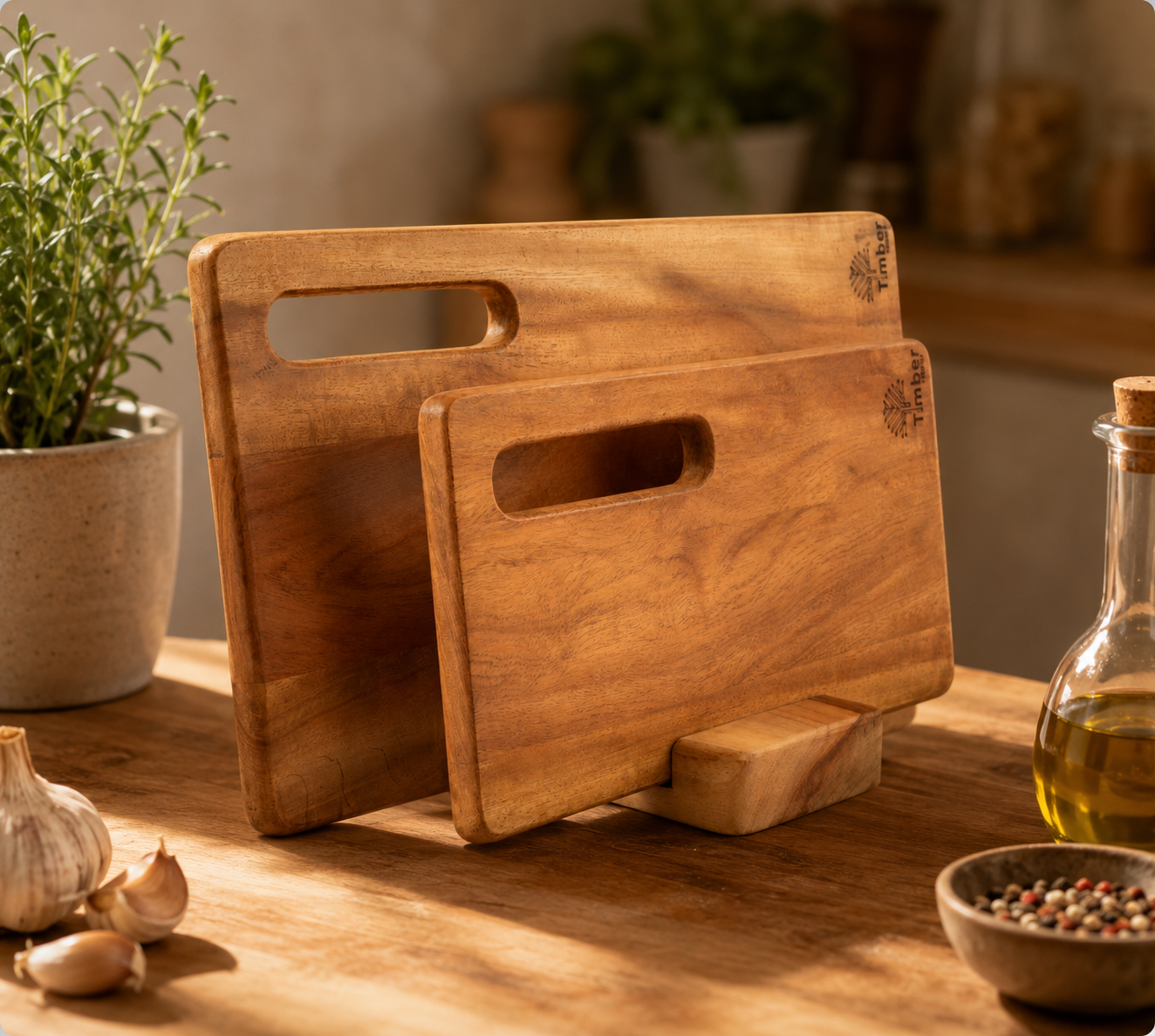
Wood Care Guide
Keep your handcrafted wood pieces looking beautiful for years. Follow these simple care tips for acacia, mango, and neem wood products.
Cleaning Your Wood Products
Hand wash only
Always wash by hand with warm water and mild dish soap. Never soak in water or put in the dishwasher — it causes warping and cracking.
Rinse quickly
Rinse with warm water immediately after washing. Do not leave soapy water on the wood surface for long.
Dry immediately
Pat dry with a clean towel right after rinsing. Stand upright or on its side to air-dry fully before storing.
Remove odours naturally
Rub half a lemon with salt over the surface to remove odours and light stains. Rinse and dry as usual.
Oiling & Conditioning
Regular oiling keeps wood hydrated, prevents cracking, and maintains its natural lustre. We recommend oiling every 1–2 months.
Recommended Oils
- ✓ Food-grade mineral oil
- ✓ Coconut oil (unrefined)
- ✓ Beeswax + mineral oil blend
- ✓ Teak oil (for outdoor pieces)
Avoid These Oils
- ✗ Olive oil (goes rancid)
- ✗ Vegetable oil (goes rancid)
- ✗ Linseed oil (toxic when ingested)
- ✗ Petroleum-based oils
How to oil:
- Make sure the wood is completely clean and dry.
- Apply a thin coat of oil with a clean cloth, rubbing in the direction of the grain.
- Let it absorb for 20–30 minutes, then wipe off any excess.
- Let dry overnight before use.
Storage Tips
Keep away from heat sources
Avoid storing near stoves, ovens, or in direct sunlight. Extreme heat causes the wood to dry out and crack.
Allow air circulation
Don't stack wet items or store in sealed bags. Allow airflow around wood items when storing.
Flat storage for boards
Store chopping boards flat or upright — never on their edge leaning against a surface, which can cause warping over time.
Moderate humidity
Wood naturally expands and contracts with humidity. A moderately humid kitchen environment (40–60%) is ideal.
Our Wood Types
Acacia Wood
Exceptionally dense and durable. Features rich golden-brown tones with natural grain variations. Highly water-resistant, making it ideal for chopping boards and serving trays. One of the hardest food-safe woods available.
Mango Wood
A sustainable choice — harvested from mango trees that no longer produce fruit. Medium hardness with beautiful light-to-dark brown patterns. Excellent for bowls, platters, and decorative pieces.
Neem Wood
Naturally antibacterial and insect-resistant. Light in weight with a pale yellowish-brown tone. Traditionally used in Indian kitchens for centuries. Perfect for spatulas, spoons, and everyday kitchen tools.
Need help with your product?
Reach out to our team — we're happy to help with care advice or any questions about your order.
Contact Us